Boil Water Advisories for Campers, RVers and Boaters

A boil water advisory assumes a house: a utility, a meter, a kitchen tap, and a notice taped to the front door. None of that fits a camper, a motorhome, or a boat. Your water arrives through a hose you own, sits in a tank under a bench, and comes out of a pump you last thought about in spring.
The rules do not change — one minute of rolling boil, or bottled water, and no tap water in your mouth — but the plumbing does, and so does the arithmetic.
Whose water is it, exactly?
The first question is not how to treat your water. It is where it came from.
- A municipal campground or marina. If the system serving it is under an advisory, the spigot is covered by that advisory. The camp host may not know yet. Assume it is affected until someone official says otherwise.
- A private campground on a well. Private wells are not regulated under the Safe Drinking Water Act, and testing is the owner’s job. A contaminated well can have nothing posted anywhere. If you are unsure, treat it.
- Your own tank. Whatever you put in is what you get out.
- Surface water. Streams, lakes, and rain barrels are raw water, always — no system, no notice, never safe without treatment.
The campground spigot
Campground water points are shared, outdoors, and often repaired with whatever was on the truck. Two habits make them safer.
Run the spigot before you fill. Thirty seconds to a minute clears the standing water in the hose and riser, where sediment and biofilm collect.
Use a dedicated drinking hose. White or blue potable-water hose, not a garden hose. Garden hoses are not manufactured to potable-water standards, and the fittings and lining can leach lead and plasticizers into water that sits in them.
During an advisory, do not fill from the spigot unless you plan to treat what comes out. Fill from a known-safe source before you arrive, and use campground water only for flushing and washing.
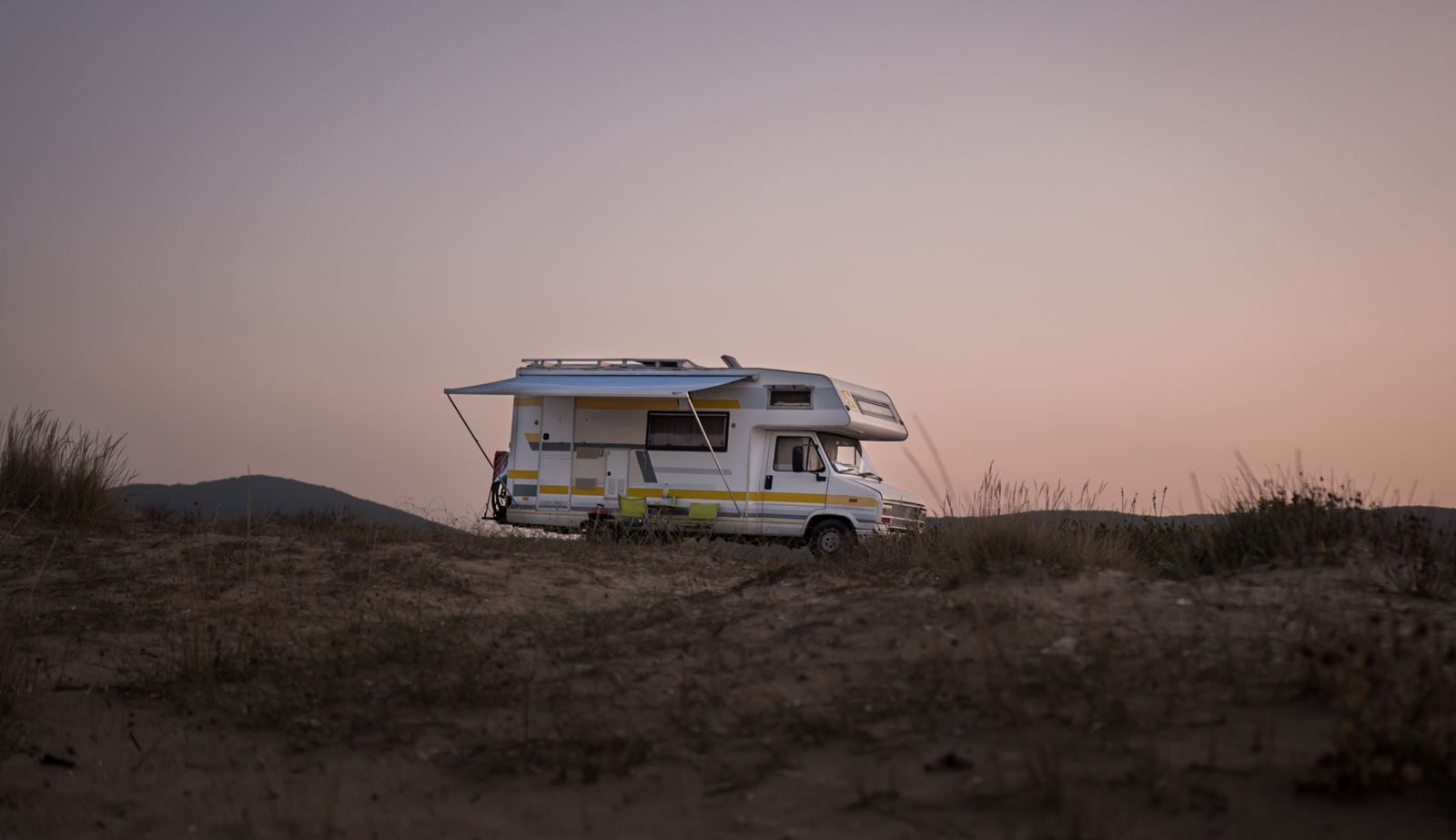
Filling and sanitizing the RV fresh tank
A fresh water tank is a dark, warm, occasionally stagnant container. That is a good environment for biofilm, and biofilm protects bacteria from chlorine.
Sanitize at the start of the season, after storage, and any time the tank has held suspect water. Follow the owner’s manual for the dose — every manufacturer publishes one — and the method is broadly the same:
- Drain and flush the tank.
- Fill with a diluted unscented-bleach solution per the manual.
- Run it through every faucet, including the toilet and outdoor shower, until you smell chlorine at each.
- Let it sit, then drain.
- Refill with fresh water and flush until the smell is gone.
Do not skip step 3. The tank is only part of the system; the lines, the pump, and the water heater hold water too.
How much water you actually have
CDC’s household planning figure is 1 gallon per person per day for three days, and two weeks if you can manage it. That gallon covers drinking, cooking, brushing teeth, and basic hygiene — not showers, not dishes, not flushing.
On the road the budget is tighter, because everything comes out of the same tank:
- Drinking and cooking: 1 gallon per person per day. Four people, three days, 12 gallons.
- Dishes: 1 to 2 gallons per meal done by hand.
- Sponge baths: about a quart per person.
- A navy shower: 2 to 3 gallons, if you are disciplined.
A 40-gallon tank therefore holds roughly ten days of drinking water for four people — or four days once you start washing dishes and taking showers. If the advisory lasts 48 hours, you are fine. If it drags, you are on a clock, and the clock is dishes.

Boiling at altitude
Boiling still works, but it takes longer and costs more fuel the higher you camp.
CDC’s consumer guidance is a full rolling boil for one minute, extended to three minutes above 6,500 feet. EPA sets its threshold lower, at 5,000 feet, and advises three minutes there. At elevation water boils at a lower temperature because the air pressure is lower — at 16,000 feet it boils at about 182 °F, not 212 °F — so the same pot delivers less heat to the germs. Camping in the Rockies, the Sierra, or anywhere above 5,000 feet, use three minutes.
Two practical consequences:
- Fuel: a rolling boil takes longer to reach and is harder to hold in wind. Carry more canister fuel than the label suggests.
- Cold: butane blends lose pressure below freezing. Keep canisters in a jacket pocket, or cook on a liquid-fuel stove.
When you cannot boil
Boiling needs fuel, a pot, and a stove that works in weather. When any of those fail, your options are tablets, a filter, or bleach — each with a catch:
- Chlorine dioxide tablets cover the widest range, including *Cryptosporidium*, but need up to four hours. See water treatment tablets.
- Iodine is fast and light but is off-limits in pregnancy and thyroid disease, and does not kill *Cryptosporidium*.
- Filters remove bacteria and protozoa but usually not viruses; a 0.01-micron ultrafilter is the exception.
- Bleach works at 8 drops per gallon for 6 percent, 6 drops for 8.25 percent, with 30 minutes of contact — see bleach ratios for drinking water.
Whichever you use, start with clear water. Sediment eats disinfectant.
Boats and marina water
A boat has the same tank problem as an RV, with salt added. Marina water is usually municipal supply, but the hose on the dock has been sitting in the sun, and the run from the tap to your deck fill is long and rarely cleaned.
- Do not assume the dock hose is potable. Ask, and if nobody knows, treat the water.
- Fill your tank at home before a trip when you can.
- Keep a separate drinking supply. A few gallons of jugged water that never passes through the boat’s plumbing solves most of this.

Living through an advisory in a small rig
The routines that matter are the ones you repeat three times a day.
Dishes. Wash in hot water, then sanitize in 1 teaspoon of unscented bleach per gallon of warm water for at least a minute, and air dry. Follow the notice if it gives a different figure — some states specify a tablespoon per gallon.
Showers. Sponge baths for the duration. If you shower, keep your mouth closed, keep it short, and do not shave. Anyone with an open cut should use boiled-and-cooled or bottled water instead.
Ice. Dump the ice tray, the ice maker, and anything the campground ice machine produced during the advisory. Ice is tap water in solid form.
Pets. Same rules as people: bottled or boiled-and-cooled water. A separate jug makes it easy to keep straight.
When the advisory lifts
Flush before you trust the system again:
- Run every cold faucet for at least five minutes.
- Run hot water long enough to replace the full volume of the water heater.
- Dump ice and make three batches, discarding each.
- Replace any inline filter that was in service during the advisory.
- Sanitize the fresh tank if it held suspect water.
Then refill from a source you trust. For the household version, see how long advisories last and cleaning and sanitizing afterwards.
Frequently asked questions
Can I drink from my RV tank during a boil water advisory? Only if you filled it from a source you know was safe and the tank and lines were clean. Otherwise treat the water or use bottled.
Is campground well water covered by the advisory? Usually not. Private and small well systems are not part of a municipal notice, and may not be tested at all. Treat it.

Bottom line
On the road, a boil water advisory is a supply-chain problem before it is a treatment problem: know where your water came from, keep the tank and hose clean, and carry enough that you are never forced to use a spigot you do not trust. Boil for a minute, three at altitude. When you cannot boil, tablets or bleach will do the job on clear water, slowly. And when the notice lifts, flush the whole system — tank, lines, heater, and ice maker — before you drink from it again.
Sources
- CDC, *How to Create and Store an Emergency Water Supply*: https://www.cdc.gov/water-emergency/about/how-to-create-and-store-an-emergency-water-supply.html
- CDC, *Drinking Water Advisories: An Overview*: https://www.cdc.gov/water-emergency/about/drinking-water-advisories-an-overview.html
- EPA, *Emergency Disinfection of Drinking Water*: https://www.epa.gov/ground-water-and-drinking-water/emergency-disinfection-drinking-water
 No Bottled Water and No Way to Boil: A Plan for the Worst Case
 Returning Home After a Flood: Water, Wells, Basements and Mold
 Boiling Water Without Power: Gas Stoves, Grills, Camp Stoves and Solar