Water Heaters, Softeners, Whole-House Filters and RO During a Boil Water Advisory

A boil water advisory is addressed to the tap, but water passes through a stack of equipment first: a softener, a whole-house cartridge, sometimes a reverse osmosis unit, and always the water heater. Each gets asked the same question during an advisory, and each gets a different answer.
The short version: none of them disinfects anything. The longer version matters because the equipment changes what you must do after the advisory is lifted, and because the water heater holds a standing volume that people wrongly treat as an emergency supply.
The short answer
- Water from the hot tap is not drinking water during an advisory, and neither is water from the tank. Boil it or use bottled, the same as cold.
- A softener does not make water safe. It swaps hardness minerals for sodium, with no effect on bacteria, viruses or parasites.
- A whole-house filter is not a treatment plant. Most cartridges are not designed to remove germs, and CDC’s advice does not change because you own one.
- A reverse osmosis unit is not a disinfection step either. It removes many dissolved contaminants, but it is not certified as a microbiological barrier for an advisory.
- After the advisory, the order is flush, regenerate, replace.
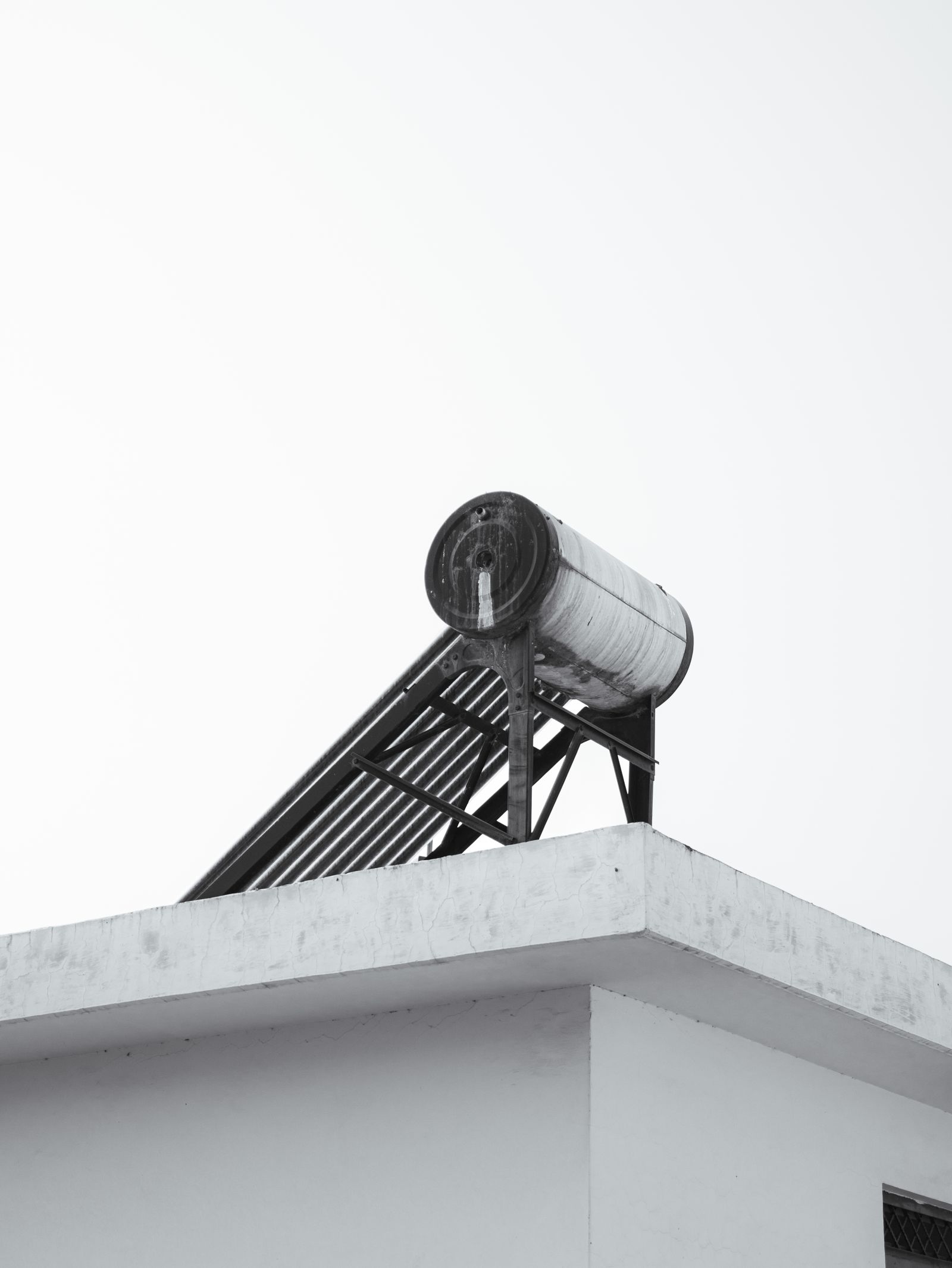
The water heater
Why tank water is off limits
CDC’s rule for advisories is broad: do not drink or use water from appliances connected to your water line. It names refrigerator and freezer dispensers specifically, but the reasoning applies to any device holding a volume of tap water — the water in it came from the same main.
A tank water heater is a storage vessel, not a treatment device. Many tanks are set near 120 °F to prevent scalding, nowhere near the temperatures used to sanitize dishes, and sediment collects at the bottom where water sits for hours.
So: no coffee, no tea, no instant soup, no washing produce from the hot tap. If you need hot safe water, boil cold water.
Flushing the tank afterward
Once the advisory is lifted, the tank has to turn over. Guidance from county health departments is concrete: run hot water until a full tank volume has been replaced — about 15 minutes for a typical 40-gallon tank, and about 30 minutes for a tank larger than 40 gallons. New York State’s instruction is the same idea in different words: run enough water to completely replace at least one full volume of all lines and tanks.
A few practical points:
- Run hot water at the furthest fixture, not just the nearest sink, so the whole line turns over.
- If your tank has a drain valve and you have not flushed sediment in a year, this is a reasonable time to do it — after the advisory, and only if you are comfortable with the procedure.
- Tankless units hold almost no volume, so the flush is short. Follow the manufacturer’s instructions rather than a timer.
Water softeners
What it does, and what it doesn’t
A softener is an ion exchange tank. Hard water passes through resin beads that trade calcium and magnesium for sodium or potassium. That is the whole job: it changes how water feels, how soap lathers, and how scale forms in pipes and appliances.
It does not filter, disinfect, or remove nitrate, lead, or most organic chemicals. Water that enters carrying *E. coli* leaves carrying *E. coli*, minus some hardness. During an advisory, softened tap water is exactly as unsafe as hard tap water.
During the advisory
Keep using the softener if you want softer water for laundry and showers, assuming your utility has not issued a “do not use” order. Do not drink from any tap without boiling first, softened or not.
One caution from the well side: if you are shock chlorinating a private well, bypass the softener first. CDC warns that the high chlorine concentrations used for well disinfection can damage softener resin, and instructs homeowners to close the valves to the unit until the process is complete.
After the advisory
Run a manual regeneration cycle. That is the standard instruction from state health departments, and it achieves two things: it backwashes the resin bed and it replaces the water sitting in the brine tank and the resin tank with water from the newly confirmed supply. If your unit has a bypass, run the cycle with the bypass open so the discharge goes to drain rather than into the house.
Whole-house filters
What the cartridge actually removes
Whole-house systems usually hold a sediment cartridge, a carbon block, or both. Sediment cartridges catch grit. Carbon reduces chlorine, taste and odor, and some carbon blocks are certified for specific health contaminants.
The certification is the part people misread. NSF/ANSI 42 covers aesthetic effects — taste, odor, chlorine. 53 covers health-related contaminants, including cyst reduction. 58 covers reverse osmosis. 244 is written for intermittent microbiological contamination, and even that is described by NSF as protection for supplies that are already microbiologically safe — a pre-incident assurance, not a license to skip boiling.
CDC’s guidance is blunt: most home water filters, including pitcher and fridge filters, are not designed to remove germs, and you should still boil filtered water during an advisory.
The cartridge after an advisory
A cartridge that was in service during an advisory has been concentrating whatever came through the main. Replace it. New York State’s guidance is explicit that filters are disposable and may be contaminated; the same applies to inline filters and housings on appliances with direct water connections. Clean the housing with a dilute bleach solution, install the new cartridge, and run water for a few minutes.

Reverse osmosis
Where RO helps and where it stops
An RO unit pushes water through a semi-permeable membrane under pressure. It is genuinely good at removing dissolved material — sodium, nitrate, lead, many organic compounds — which is why it is the standard choice for a specific contaminant concern. NSF/ANSI 58 is the certification to look for.
It is not a sterilizer. The membrane rejects most bacteria, but the housing, tubing, storage tank and faucet are all downstream, and a unit that has been sitting during an advisory can grow biofilm in the tank. Residential RO systems are not certified for microbiological protection during a boil water advisory, and CDC’s advice carves out no exception for them.
RO also sends a reject stream to the drain, a real cost when the utility has asked for conservation, and the product water is low in minerals, which is why it tastes flat.
After the advisory
Replace the pre- and post-filters, and check the manual for the membrane and tank sanitizing procedure. Many manufacturers specify discarding the first tank of product water, and a storage tank needs to be drained and refilled before you drink from it.
If the notice is chemical, not microbial
Everything above assumes a boil water advisory, which is about germs. A “do not drink” or “do not use” notice is a different instruction. RO removes some chemicals, and a certified unit may reduce lead or nitrate. That does not make it a response to a chemical advisory: the concentration in the main is unknown, and a “do not use” order covers skin contact as well as drinking. Use bottled water for everything, including bathing. Boiling is not a fix either — it concentrates non-volatile contaminants, as covered in does boiling remove lead and chemicals.
Frequently asked questions
Is water from the hot tap safe if the water heater is set very high? No. A tank is not a sterilizer, and CDC’s appliance rule does not exempt hot water.
Does a water softener remove bacteria? No. It exchanges hardness minerals for sodium and has no microbiological effect.
Can I drink RO water during a boil water advisory? No. Use bottled or boiled water, and service the unit once the advisory is lifted.

Bottom line
The equipment between the main and your glass is there for comfort, scale and taste — not for emergencies. During an advisory, every one of these devices produces water that still needs to be boiled or replaced with bottled water. Afterward the work is mechanical: flush the lines and the tank, regenerate the softener, replace the cartridges, drain the RO tank. Do it in that order and the system comes back clean.
If your water comes from a private well rather than a main, the sequence is different — start with flooded well testing and disinfection.
Sources
- CDC, *About Choosing Home Water Filters*: https://www.cdc.gov/drinking-water/prevention/about-choosing-home-water-filters.html
- CDC, *Drinking Water Advisories: An Overview*: https://www.cdc.gov/water-emergency/about/drinking-water-advisories-an-overview.html
- NSF International, *NSF Standards for Water Treatment Systems*: https://www.nsf.org/consumer-resources/articles/standards-water-treatment-systems
- NYS Department of Health, *Boil Water Notices: Information for Residents and Homeowners*: https://www.health.ny.gov/environmental/water/drinking/boilwater/docs/faq_residents_and_homeowners_short.pdf
 Home Water Test Kits Explained: Bacteria, Chemicals and When a Result Means Anything
 Water Treatment Tablets, Iodine and Chlorine Dioxide: What They Do and Where They Stop
 Disinfecting Water With Bleach: The Ratios That Actually Work