Home Water Test Kits Explained: Bacteria, Chemicals and When a Result Means Anything
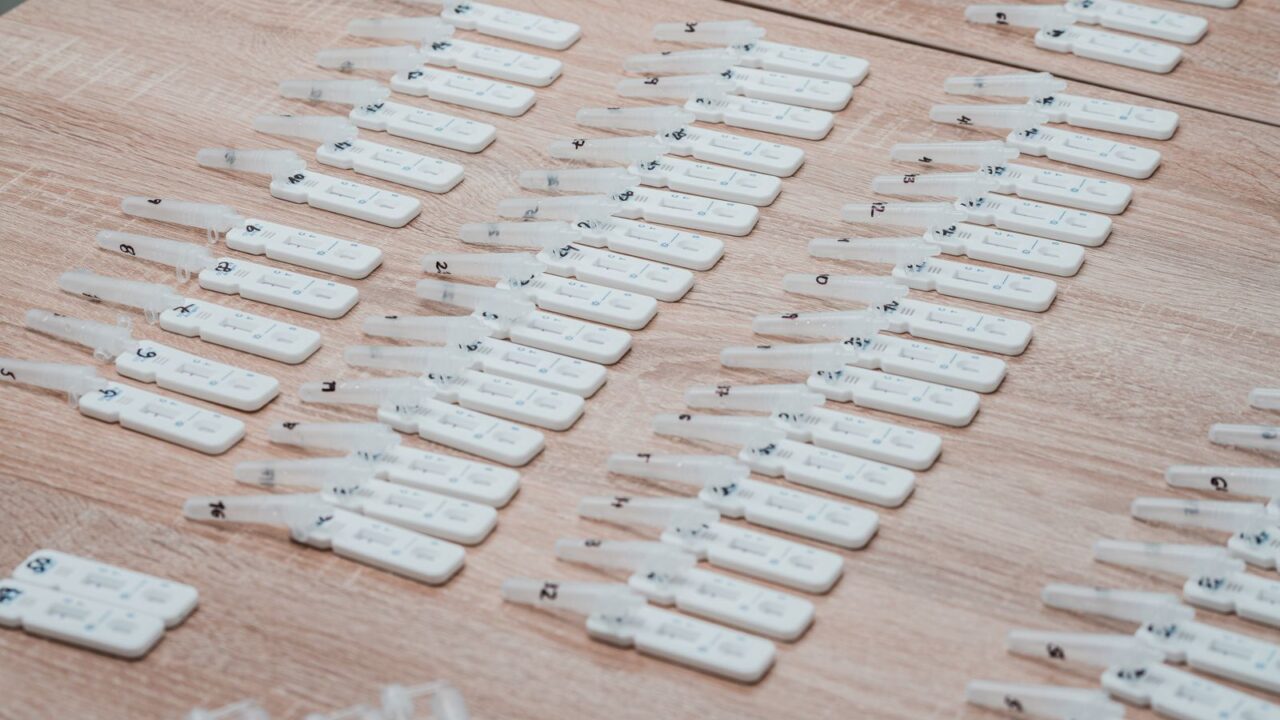
Two products can both be labeled “water test kit.” One costs about as much as lunch and gives you a color in ninety seconds. The other involves a sterile bottle, a courier and a laboratory.
They answer different questions, and neither tells you whether the water coming out of your tap is safe this afternoon. During a boil water advisory that distinction is the whole point: the answer comes from your utility, not from your kitchen counter.
What your utility already tests
A public water system is sampling constantly, on a schedule set by federal and state rules.
- **Coliform bacteria and *E. coli*** in 100-milliliter samples. A positive total coliform result triggers repeat sampling; a confirmed *E. coli* result is what typically produces a boil water notice.
- Disinfectant residual and turbidity, continuously or daily, because both are early warnings that treatment is failing.
- Regulated contaminants on a schedule — nitrate, lead and copper under the Lead and Copper Rule, disinfection byproducts, and the rest of the regulated list.
- Results published annually in a Consumer Confidence Report, which utilities must deliver by July 1 for the previous year. It is free and usually posted on the utility’s website.
That is the system that issues and lifts the notice, and a boil water notice is not a failure of testing — it is testing working. Notices normally lift after two consecutive rounds of samples taken 24 hours apart come back clean, a standard no home kit can meet. How long an advisory lasts explains the sequence.
The two families of test
Bacteriological tests
The question is narrow: are coliform bacteria present? The method is narrow too — a sterile bottle, a 100 mL sample, a controlled incubation, and a laboratory.
Consumer versions exist: presence/absence vials you leave at room temperature for a day or two, then read for a color change. They can tell you something grew, not what. They are easy to contaminate during sampling, and one clean sample is weak evidence, because contamination in a distribution system is intermittent.
Chemical and physical tests
This family is much friendlier to home testing, because the chemistry is simpler and the concentrations are higher.
- Strips handle reasonably well: pH, total hardness, alkalinity, free chlorine, nitrate, nitrite, iron, manganese, sulfate, total dissolved solids.
- Meters handle well: pH, conductivity, TDS — if you calibrate them.
- Laboratory only: lead, arsenic, PFAS, pesticides, volatile organic compounds, radiological parameters. The detection limits are simply below what a strip can see.
Where strips go wrong
Strips are semiquantitative. They tell you “about 2 ppm,” not “1.8 ppm.” That is fine for checking whether a softener is working and useless for a compliance question.
The routine mistakes:
- An expired or damp bottle. Strips absorb humidity. A bottle left open in a bathroom is compromised.
- Wrong dip time. Brands differ on seconds, on shaking off versus blotting, and on reading window.
- Reading under bad light. Color matching is subjective; fluorescent kitchen light is the worst case.
- Testing after a softener, filter or water heater and drawing conclusions about the source water.
- Confusing chlorine with safety. A chlorine reading tells you disinfectant is present. It does not tell you the water is free of pathogens.
Lead is not a strip test
Strips marketed for lead are unreliable around the federal action level of 15 parts per billion. Below it — where the interesting question lives — a color change is hard to tell from the control.
Lead is a plumbing problem more often than a source-water problem: the service line, solder in older homes, brass fixtures. Concentrations depend on how long water sat in the pipe, so one sample can miss it entirely.
If lead is your concern, the useful test is a laboratory first-draw sample: water that has sat in the pipes overnight, drawn before anyone runs a tap. Your utility’s Lead and Copper Rule results are the other half of the picture. And no filter-strip result changes the basic rule that boiling does not remove lead.
When a home test is worth the money
- A private well. Annual bacteria and nitrate testing at minimum, more if you have reason to worry.
- After flooding, which has its own procedure below.
- Verifying that a filter or softener is doing its job — chlorine breakthrough on a carbon filter, hardness after a softener.
- Chasing a taste, odor or stain problem. Iron, sulfur, hardness and manganese are exactly what strips are good at.
- Buying a house on a well, before you close.
Not worth it: trying to end an advisory early, or “proving” the tap water is fine because a strip looked clean. Neither is a thing a kit can do.
A private well after flooding
This is the case where home testing most often goes wrong, because people test at the wrong moment and trust the result.
- Assume the well is contaminated. Floodwater carries bacteria, sewage, fuel and sediment, and a flooded wellhead can be breached at the casing.
- Do not drink, cook, brush teeth or make ice with the water until testing says otherwise. Boil it or use bottled. The emergency water guidance covers quantities.
- Inspect the wellhead — casing, cap, conduit, electrical connections. If the casing is damaged or the well was submerged, call a licensed well contractor rather than working it out yourself.
- Shock chlorinate the well and the plumbing following your state health department’s instructions, then flush until the chlorine smell is gone.
- **Test at a certified laboratory for coliform and *E. coli* — after disinfection and flushing**, not before. Testing first tells you what you already know.
- Follow your state’s rule on repeat samples. Many states want more than one consecutive clean result before they will let a do-not-drink notice be lifted; yours will say how many.
Taking a sample without wrecking it
Most bad results are sampling errors, not water problems.
- Remove the faucet aerator, and wipe the spout.
- Run cold water for about five minutes before filling, the same flush utilities recommend after an advisory lifts.
- Do not touch the inside of the cap or bottle. The sample is sterile until you do.
- Fill to the line, cap immediately, and keep the bottle cool on the way to the lab.
- Respect the holding time. Bacteriological samples have a short window, often a day or less.
- For lead, sample first thing in the morning before any tap has run.
- Do not sample through a filter or softener unless that is what you are testing.

Lab versus strip, in one table
| Question | Strip | Laboratory | |—|—|—| | Is coliform present? | No reliable answer | Yes | | Is lead above the action level? | No | Yes | | Is my softener working? | Yes | Overkill | | Is my carbon filter passing chlorine? | Yes | Overkill | | Nitrate confirmation | Rough screen | Yes | | PFAS, pesticides, VOCs | No | Yes |
Costs track that table: strips cheapest, a single bacteriological test in the middle, a broad panel — PFAS, metals, volatiles — at the expensive end. Turnaround runs from a day to a few weeks.
What a kit cannot tell you
- Whether the water is safe right now, during an advisory. Only the utility’s sampling can lift a notice.
- Whether a filter is certified. That is an NSF/ANSI standard question, not a test result — the filter guide covers which standard means what.
- Whether a chemical plume is present. Boiling does not remove chemicals, and a clean strip does not detect them.
Bottom line
Strips answer trend questions: hardness, chlorine, iron, pH. Laboratories answer questions you would act on: bacteria, lead, nitrate, PFAS. Your utility answers the only question that matters during an advisory — whether the notice is still in effect. Pay for the lab when the answer changes what you do; if your well flooded, disinfect, flush, then test, in that order.
Sources
- CDC, *Drinking Water Advisories: An Overview*: https://www.cdc.gov/water-emergency/about/drinking-water-advisories-an-overview.html
- EPA, *Public Notification Rule*: https://www.epa.gov/dwreginfo/public-notification-rule
- EPA, *Emergency Disinfection of Drinking Water*: https://www.epa.gov/ground-water-and-drinking-water/emergency-disinfection-drinking-water
- NYS Department of Health, *Boil Water Notices: Information for Residents and Homeowners*: https://www.health.ny.gov/environmental/water/drinking/boilwater/docs/faq_residents_and_homeowners_short.pdf
 Water Treatment Tablets, Iodine and Chlorine Dioxide: What They Do and Where They Stop
 Disinfecting Water With Bleach: The Ratios That Actually Work
 A Flooded Private Well: Test, Disinfect and Flush Before You Drink