Talking to Kids About a Boil Water Advisory
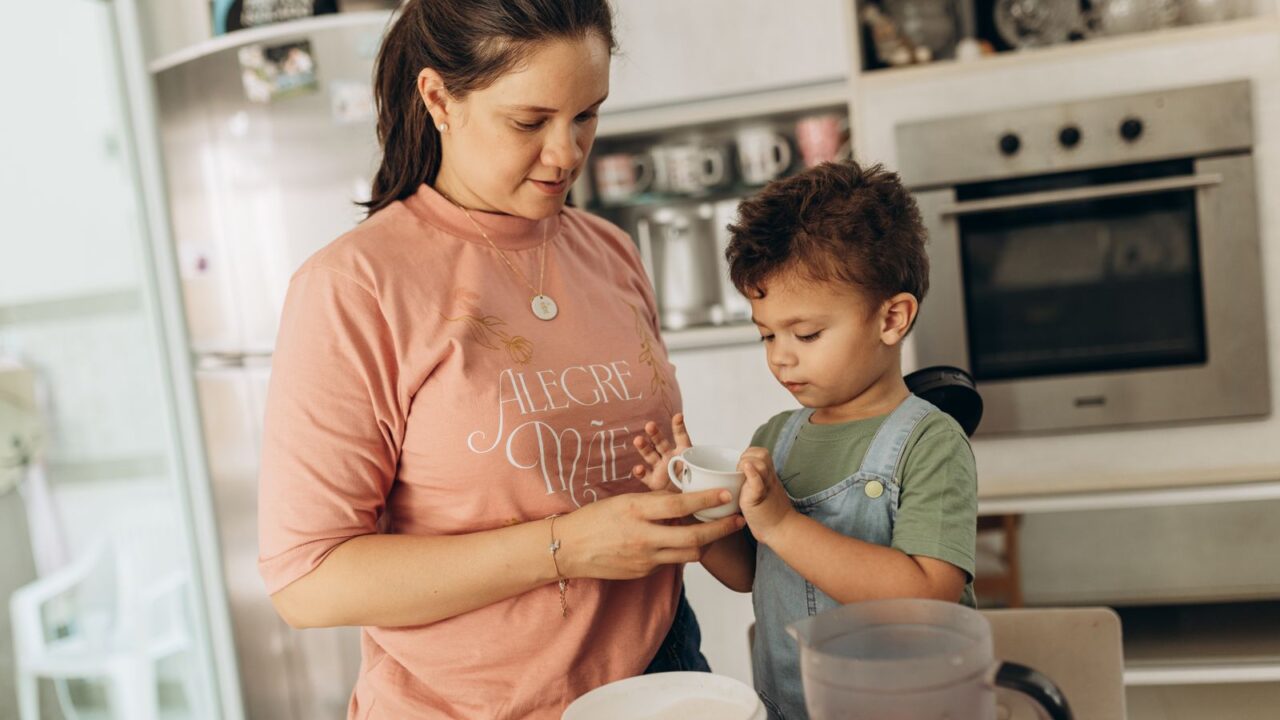
A boil water advisory changes the most ordinary objects in a house. The tap becomes something you check, the kettle moves to the front of the counter, and a plastic jug appears next to the sink with a label on it. Children read all of that before anyone explains it, and what they invent to explain it is usually worse than the truth.
The goal is not a detailed briefing on water treatment. It is three things: an explanation short enough to remember, a routine that does not move, and an honest answer to “when will it be fixed” that does not promise a date you cannot control.
What children actually need to hear
Four facts, in this order.
- Something changed, and the adults know about it. “The water in our neighborhood has germs in it right now. The city is fixing it.”
- What we do instead. “We boil the water before we drink it, or we use the bottles. That makes it safe.”
- What stays the same. School, bedtime, the dog, soccer, dinner.
- Who is in charge. “The grown-ups are handling it. You don’t have to.”
That last line matters more than it sounds. A child who believes the household is out of control will fill the gap with their own theories.

Scripts by age
Ages 2 to 4
Keep it concrete, present tense, and about three sentences. “The water needs a bath first. We use this bottle.” Show them the bottle, let them hold it, and do not use the words germ, bacteria, or contaminated — at this age they land as “there is something invisible and everywhere,” which is not something a three-year-old can act on. At this age, behavior is the message: they will copy the bottle routine long before they understand the reason.
Ages 5 to 8
This is the age that loves a mechanism, and the mechanism is genuinely simple. “Germs in water die when the water boils. So we boil it for one minute, then it’s safe to drink.” Let them watch the timer. Give them a job — putting stickers on the bottles, carrying the jug to the table, being the one who checks that the kettle is off. A job converts helplessness into competence, which is the whole game at this age.
If they ask whether they already drank bad water, answer the question they asked: “You’re fine. If you ever feel sick, you tell me and we’ll call the doctor.” Do not add a lecture about symptoms.
Ages 9 to 12
They will want the cause, the timeline, and the rules. Give all three, including the uncertainty. “A pipe broke and the pressure dropped, so the water might have picked up germs. The city has to test it on two different days before they can say it’s safe, so it’s usually a day or two, sometimes longer.” Then the specific rules for their day: no fountain at school, no ice, no brushing teeth from the tap, bottled water in the lunchbox.
Children this age also start monitoring the adults. If you are calm and specific, they will borrow that.
Teenagers
Teenagers are usually already saturated with information and short on trust. Skip the simplified version and give them the actual notice — the utility’s page, the boil time, the date. “Here’s what it says. Boil one minute. Here’s what we’re doing.” Invite them to check it themselves.
They may also repeat something from a group chat that is wrong — boiling does not remove chemicals — or decide the rules are for other people, particularly at practice or a friend’s house. Our guide to gyms and studios covers what to expect there.
Routines carry more weight than explanations
Children regulate on predictability. A boil water advisory is disruptive precisely because it makes ordinary tasks complicated, so the useful move is to rebuild the routine around the constraint rather than suspend it.
- Build a water station. One counter, one jug, one filled bottle per person with a name on it. Everything safe comes from that spot, and nothing comes from the tap.
- Keep the kettle ritual. If you boil water every morning, keep doing it at the same time. Same pot, same timer, same place to set it down to cool.
- Do not move bedtime, bath time or the school run. A bath is still fine for a healthy child as long as they do not swallow the water; keep it to the usual length and keep the usual toys. For babies and toddlers, a sponge bath reduces the chance of swallowing.
- Say what is normal out loud. “We still have dinner at six. Grandma still calls on Sunday.”
School and daycare
Schools and daycares operate under their own plans and their own instructions from the health department, and those plans are usually more conservative than a household’s. Ask three questions at drop-off, or by email if you would rather have it in writing:
- Are the drinking fountains and bottle fillers shut off?
- Is the kitchen using bottled or boiled water, and is ice off the menu?
- How are the kids washing hands — safe water, or sanitizer?
Send a filled bottle with your child’s name on it every day, and check whether the school wants spares kept in the classroom. If your child is in daycare and takes formula, ask what water they are mixing it with; ready-to-feed formula is the safest answer during an advisory, and our guide to formula during a boil water advisory has the details.

When the worry does not settle
Most children absorb a two-day advisory and move on. Some do not, and the signs are usually physical before they are verbal: stomachaches on school mornings, trouble falling asleep, a return to younger behavior, repeated questions with the same answer, or a sudden reluctance to drink anything at all.
What helps:
- Answer the same question the same way, every time. Repetition is how the answer becomes believable. Changing the wording reads as uncertainty.
- Cap the input. A child who hears the advisory discussed on the radio, at dinner and in three group chats gets the message that this is the only thing happening. Turn it off in front of them.
- Restore one piece of control. Let them choose the bottle, pack the lunch, or hold the shopping list for water.
- Do not punish the fear. “You’re being silly” teaches a child to stop telling you things, not to stop being afraid.
If sleep problems, school refusal or stomachaches persist beyond a week or two, or if a child stops drinking fluids, call your pediatrician — that is no longer a water problem. Local services are available through 211.
What not to say
- “It’s poison.” It is not, and the word sticks. Children who learn that the tap is poison can carry distrust of tap water for years.
- “If you drink it, you’ll get really sick.” True only in a specific, unlikely chain of events, and it invites a child to interrogate every sip they have already taken.
- “I don’t know if we’ll have enough water.” Share the plan, not the inventory anxiety.
- “The city messed up.” Blame invites a child to look for someone to be angry at, and they usually pick the nearest authority, which is you.
- “It’ll be fixed tomorrow.” You do not know that. “They’re testing it, and they’ll tell us” is true and sufficient.

A five-minute family meeting
- State the facts in two sentences.
- Show the water station and the kettle routine.
- Say what does not change this week.
- Give each child one job.
- Ask what they have heard, and correct it.
- Say when you will update them — and then do it.

Bottom line
Children do not need the microbiology. They need a short true story, a routine that holds, a job they can do, and an adult who is clearly not frightened. Boil the water, label the bottles, keep bedtime, and answer the same question the same way until they stop asking.
Sources
- CDC, *Drinking Water Advisories: An Overview*: https://www.cdc.gov/water-emergency/about/drinking-water-advisories-an-overview.html
- Ready.gov (FEMA), *Ready Kids*: https://www.ready.gov/kids
- CDC, *How to Make Water Safe in an Emergency*: https://www.cdc.gov/water-emergency/about/index.html
 Gyms and Fitness Studios During a Boil Water Advisory
 Braces, Retainers and Implants During a Boil Water Advisory
 Boil Water Advisories and Diabetes: Feet, Hydration and Insulin