Can You Take a Bath During a Boil Water Advisory? What’s Safe for Adults and Kids
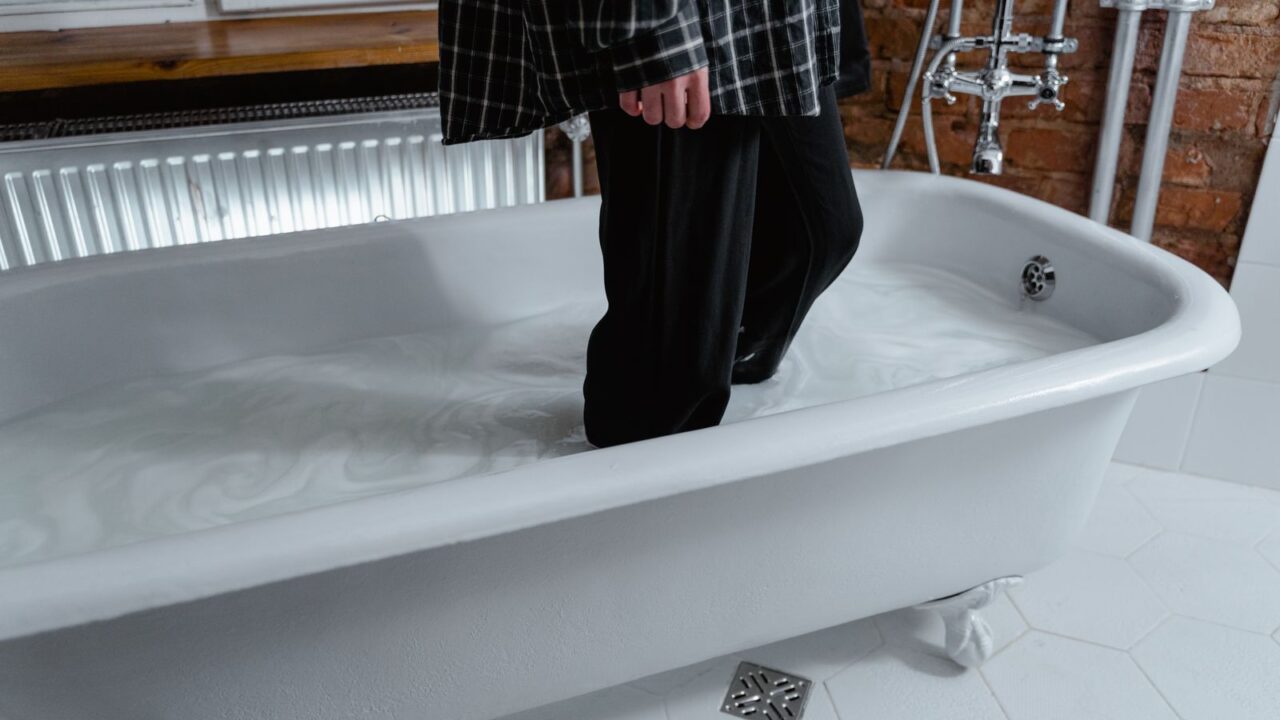
The advisory says not to drink the water. It does not say what to do about the bathtub, and that gap produces more confusion than almost any other part of the notice. Showers get a cautious yes from public health agencies. Baths get a shrug.
The difference matters. A shower lasts five to ten minutes and the water passes over your skin and down the drain. A bath means sitting in a tub of water for twenty minutes, with your face near the surface, your mouth often open, and children splashing.
This guide explains what the guidance actually says, who should avoid baths entirely, and how to bathe safely when you have no other option.
The short answer
Healthy adults: a bath is low risk if you keep your mouth closed, do not put your head under, and have no open cuts. It is still not the recommended option.
Children under 5: sponge-bathe instead. Children swallow bathwater constantly, and a small body needs a small dose.
Anyone with open wounds, a recent surgery, a central line, or a weakened immune system: sponge-bathe with bottled or boiled-and-cooled water. Do not soak.
Hot tubs: no. Hot water, aeration and many bathers create aerosols that reach deep into the lungs.
Best option: a quick shower with your mouth closed, or a sponge bath with safe water.
What the CDC and states actually say
The CDC’s wording is careful: be careful not to swallow water when bathing or showering, and consider giving babies and young children a sponge bath to reduce the chance they swallow water.
State health departments go further. New York’s guidance says water may be used by healthy individuals for showering, bathing, shaving and washing, as long as care is taken not to swallow water and to avoid shaving nicks — and then adds that people with open wounds, cuts, blisters or recent surgical wounds, and people who are immunocompromised or chronically ill, should use boiled-and-cooled water or an alternate source.
The pattern is consistent: the risk is ingestion and broken skin, not skin contact itself.
Why a bath is riskier than a shower
Three reasons.
Time and volume. Twenty minutes of soaking gives many more opportunities for a splash to reach your mouth than a five-minute shower.
Face proximity. In a bath, your face is thirty centimeters from the water surface. In a shower, the water hits the top of your head and drains away.
Children. A child in a bath swallows water, blows bubbles, drinks from a cup, and puts toys in their mouth. There is no way to supervise that closely enough.
Add a fourth: a bath is often shared, and the tub itself becomes a contact surface that everyone touches.
How to bathe safely if you must
If you have no shower and no way to sponge-bathe, and you are a healthy adult:
- Run the bath with water you would be willing to drink — bottled or boiled-and-cooled. That is the only way to remove the risk entirely, though it is impractical for a full tub.
- Keep the water below shoulder height and your head out of it.
- Do not wash your face with bathwater. Use a washcloth with safe water at the sink.
- Keep your mouth closed; do not rinse your mouth in the tub.
- Shower off afterwards with safe water if you can, or pat dry with a clean towel.
- Clean the tub afterwards with hot soapy water and a disinfectant.
If you have any cut, scrape or rash, cover it with a waterproof dressing before getting in, and change the dressing afterwards.
The sponge bath method
This is the safest option for children, older adults and anyone immunocompromised, and it uses less than a gallon.
- Fill a basin with a quart of warm boiled-and-cooled or bottled water.
- Wet a washcloth, wring it out, and wipe the face first, then the neck, arms, torso, legs and finally the diaper area or feet.
- Apply a little soap to the cloth for the body, and rinse the cloth in the basin between areas.
- Rinse with a second cloth dampened in clean safe water.
- Pat dry with a clean towel and dress quickly.
- Wash your hands with safe water afterwards.
For a baby, do this on a changing pad or a towel on the floor, and keep the room warm.

Children: the highest-risk group
Children are not small adults in a bath.
- They swallow water repeatedly, often deliberately.
- They put toys, cups and sponges in their mouths.
- Their bodies are small, so a given dose of pathogens is proportionally larger.
- Cryptosporidium and Giardia are common in child care settings, and both can survive in water.
Use a sponge bath, or a shallow basin bath with safe water that is emptied immediately. Do not let children share bathwater.
Hair washing and personal care
- Hair: wash over a sink or in the shower with safe water, keeping your head back so water does not run over your face.
- Shaving: see our guide to shaving during a boil water advisory — the risk is nicks, not soaking.
- Contact lenses: never use tap water; wash hands with safe water first.
- Dentures: clean over a basin with safe water, not over the sink.
Hot tubs, pools and saunas
- Hot tubs: skip. Aerosolized water is inhaled deeply, and the warm temperature encourages bacterial growth.
- Pools: a well-chlorinated pool is low risk for adults who do not swallow water, but children should wait. See watering plants and filling pools.
- Saunas and steam rooms: fine — no water contact, as long as you do not use the adjacent showers with tap water.
After the advisory
- Clean and disinfect the tub, the shower floor and the faucet handles.
- Run the shower for a few minutes before first use.
- Wash bath toys in hot soapy water and discard any that hold water inside.
- Replace the bath mat and wash towels on a hot cycle.
Our cleaning guide covers the bathroom in detail.
Frequently asked questions
Can I bathe my baby during a boil water advisory? Sponge-bathe with bottled or boiled-and-cooled water. Do not fill a baby tub from the tap.
Is a bath safe if I do not swallow the water? For a healthy adult, the risk is low. It is not zero, and it is higher than a shower.
Can I use the bath to wash my hair? Keep your head back and your mouth closed, and rinse with a cup of safe water rather than dunking.
What about Epsom salt baths? The salt does not disinfect the water. The risk is the same.
Can I use the hot tub if it is chlorinated? Skip it during the advisory. Aerosols are the concern, not just ingestion.


Bottom line
A bath is not forbidden during a boil water advisory, but it is the least safe way to get clean. Healthy adults can shower carefully or soak briefly without swallowing; children, older adults and anyone with wounds or a weakened immune system should sponge-bathe with safe water. Hot tubs and shared bathwater wait until the notice is lifted.
For hand hygiene, see washing your hands during an advisory, and for the household routine, what to do during a boil water advisory.
Sources
- CDC, *Drinking Water Advisories: An Overview*: https://www.cdc.gov/water-emergency/about/drinking-water-advisories-an-overview.html
- NYS Department of Health, *Boil Water Notices: Information for Residents and Homeowners*: https://www.health.ny.gov/environmental/water/drinking/boilwater/docs/faq_residents_and_homeowners_short.pdf
- CDC, *Healthy Swimming*: https://www.cdc.gov/healthy-swimming/
 Gyms and Fitness Studios During a Boil Water Advisory
 Talking to Kids About a Boil Water Advisory
 Braces, Retainers and Implants During a Boil Water Advisory